Turning Down the Volume
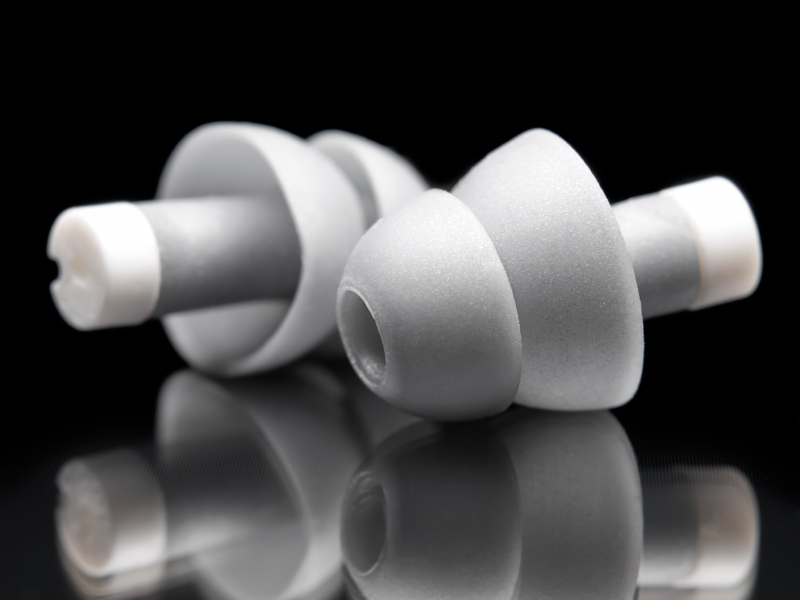 As parents, we often wonder if our children are listening to us. You may also question if they are hearing us as well. Consider how noises may affect your family’s hearing. Have we become too tolerant of loud sounds?
Noise induced hearing loss is just what it sounds like; hearing loss due to loud noises. It is preventable and not reversible.
Please bring protective ear gear or plan to purchase it at the track. Make the investment for a good pair that can be worn again and again. It’s amazing how loud a team of horses under the hood can be.
Facts About Noise-Induced Hearing Loss
- Noise-induced hearing loss is 100 percent preventable.
- Symptoms of noise-induced hearing loss will increase gradually. Over time, the sounds a person hears may become distorted or muffled, and it may be difficult for the person to understand speech. Someone with noise-induced hearing loss may not even be aware of the loss, but it can be detected with a hearing test.
- Researchers who study hearing loss have found that a person who is exposed to noise levels at 85 decibels or higher for a prolonged period of time is at risk for hearing loss. Many devices that children use today have noise levels much higher than 85 decibels. For example, an MP3 player at maximum level is roughly 105 decibels. That’s 100 times more intense than 85 decibels!
- Children frequently participate in activities involving potentially damaging noise levels: playing with noisy toys, band instruments, and video games; listening to personal music players and stereos at high volumes; attending concerts and movies; operating lawn mowers, leaf blowers, and power tools; and riding off-road vehicles and snowmobiles.
- When we are exposed to harmful noise, sounds that are too loud or loud sounds that last a long time, sensitive structures in our inner ear can be damaged, causing noise-induced hearing loss. These structures, called hair cells, are small sensory cells in the inner ear that convert sound energy into electrical signals that travel to the brain.
- Scientists believe that, depending upon the type of noise, the pure force of vibrations from loud sounds can cause hearing loss. Recent studies also show that exposure to harmful noise levels triggers the formation of molecules inside the ear that contribute to hair cell damage and noise-induced hearing loss. These destructive molecules play an important role in hearing loss in children and adults who listen to loud noise for too long.
- Noise-induced hearing loss is cumulative, invisible, and permanent. It’s cumulative because the damage can start when we are young and get worse over time. It’s invisible because it can happen without our even noticing it, until it’s too late. And it’s permanent because, unlike a broken arm that gets better over time, we can’t “heal” our hearing. Once it’s damaged, it’s damaged for good.
Preventing Noise Induced Hearing Loss
- Set clear rules when hearing protectors should be worn. Tell your children that you expect them to wear hearing protectors in noisy environments, even when you aren’t there to supervise.
- Be a good role model. When you are mowing the lawn, using a leaf blower, or working with power tools, wear hearing protectors. Consider doing the same at sporting events, amusement parks, arcades, and other noisy places.
- Teach your children how cumulative exposure to excessive noises can cause noise-induced hearing loss (NIHL). Visit the Noisy Planet web site to help your child understand the causes and prevention of NIHL.
- Teach your child about noise levels. Point out sources of excessive noise, like the siren of a passing fire truck or ambulance. Guess the decibel level, and look it up when you get home. For a list of decibel levels of common sounds, go to the Noisy Planet bookmark.
- Think about buying a small decibel meter from an electronics store and carrying it with you. Additionally, you can download a decibel meter application to some cell phones. You might be surprised to learn the noise levels of public areas or restaurants. In this way, your child will become more aware of excessive noise, where it occurs, and when hearing protectors may be needed.
- Take your child shopping for hearing protectors, either online or in stores. Discuss with your child whether he or she would rather wear earplugs that can be hidden by hair or a hat or make a fashion statement with more noticeable hearing protectors. There are many fashionable, colorful, and comfortable styles of hearing protectors available.
- Choose hearing protectors that fit in with your child’s daily activities. Add earplugs or earmuffs to your shopping cart when you are outfitting your child for sports or band. Special musicians’ earplugs are available so that your child can play an instrument loudly and clearly, but hear the music at a softer level. There are also hearing protectors designed specifically for hunting or shooting sports. Hearing protectors are available from many pharmacies, sporting good stores, hardware stores, and online companies.
Various Noise Levels in Decibels
- Aircraft at take-off (180)
- Fireworks (140)
- Amplified music (110)
- Lawn mower (90)
- Vacuum cleaner (80)
- City traffic (80)
- Normal conversation (60)
- Refrigerator humming (40)
- Whisper (20)
- Calm breathing (10)
Hearing Protection
- There are two types of ear protection available: ear muffs or ear plugs.
- Ear plugs can be pre-molded in a cone shape or are available to be rolled up and placed into the ear canal.
- Ear muffs look like wireless headphones and are made of a variety of materials.
Source:
noisyplanet.nidcd.nih.gov